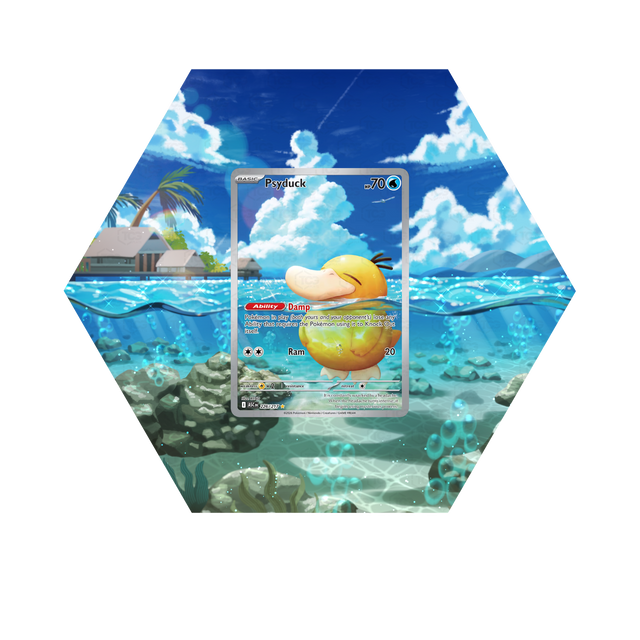
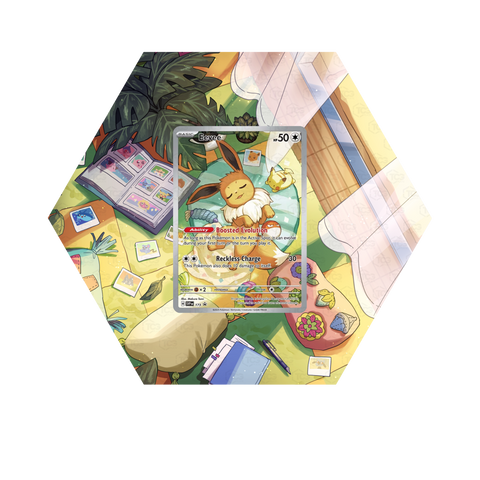
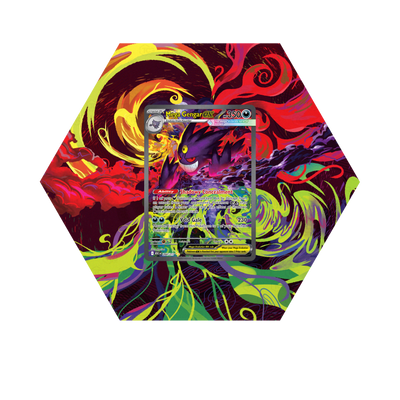
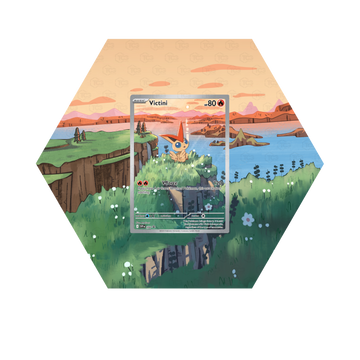
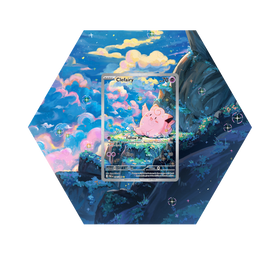
It's the one worry that keeps most collectors from hanging up their best cards: “What if the artwork fades over time?”
The concern is valid – but it's often made bigger than it needs to be. Let's look honestly at what light, UV radiation and time really do to a Pokémon card, and what you can do about it.
Why cards fade in the first place
Colours fade when light energy breaks down the pigments in the print. The main culprit is UV radiation – the part of sunlight we can't see. Visible light contributes too, but far more slowly.
Three factors decide it: how high the UV content of the light is, how directly it hits the card, and for how long. A card in a dark drawer barely ages at all. A card that hangs in direct midday sun for hours every day ages fastest.
The difference between direct and indirect light
This is the most important lever – and it has nothing to do with the display, but with the location.
Direct sunlight streaming through a window and hitting the same spot for hours is the most critical case. Indirect daylight in a normally lit room is far less aggressive. A wall that isn't in blazing sun already gives displayed cards half the protection they need.
Artificial light – normal room lighting or LEDs – has very little UV content and is harmless for the vast majority of collections.
What a UV-protection case does – and doesn't
A good case with UV protection filters out a large part of the UV radiation before it reaches the card. It tackles the problem exactly where it starts.
You still have to be honest: UV protection means “greatly reduced”, not “frozen forever”. No protection in the world makes a card that hangs permanently in blazing sun completely indestructible. But the combination of a UV case and a sensible spot on the wall puts a displayed card in a range where visible fading is, in practice, a non-issue for years.
That's exactly why every one of our displays includes a precise UV-protection case. Not as an add-on, but as standard – because visibility without protection isn't a good idea.
Don't forget humidity and temperature
Light is the best-known factor, but not the only one. Strong swings in humidity can warp cards, and high heat – say, directly above a radiator – isn't good either. A dry, temperature-stable spot on a normal interior wall is ideal. And luckily, that's exactly where most people want to show their collection anyway.
The practical short version
If you want to make your cards visible without risking them, a few simple rules are enough: use a UV-protection case, avoid constant direct sun, and pick a normal interior wall. That takes the fading argument off the table in practice.
All of our Frames®, Hex Shapes® and acrylic displays come with a UV-protection case. Not sure what fits your collection? Use the display finder or take a look at the FAQ.
Frequently asked questions
Doesn't a card behind glass or acrylic automatically stop fading?
Not automatically. Ordinary glass or acrylic only blocks part of the UV radiation. Only dedicated UV protection reliably filters out the critical portion – which is why it's standard with us.
Can I hang my card in permanent direct sunlight?
Better not. Hours of direct sun is the one genuinely critical case. With a UV case and a spot away from blazing sun, fading is a non-issue for years.
Do I have to alter the card for protection?
No. The card is simply placed into the removable protective case and stays completely unchanged.