Anyone who collects Pokémon cards knows the little dilemma: you want to see your best cards – every day, not just when flipping through a binder. At the same time they should be safe from fingerprints, dust, light and the bent corner from one wrong grip. Displaying and storing pull in different directions at first.
The good news: you don’t have to choose entirely. But it helps to know what each solution can really do. Let’s walk through the options.
Storing: safe, but invisible
Binders, toploaders in boxes, sleeves in a case – classic storage protects well and takes little space. The price: the cards are out of sight. A collection in the cupboard is safe, but it gives you nothing back when you’re standing in the room. For the bulk of a collection – duplicates, bulk, trade stock – that’s exactly right. For your favourite cards it feels like a waste.
Displaying: visible, but with what?
The moment a card is meant to be shown, the question becomes how. A simple stand on the shelf? A glass cabinet? A display on the wall? Each option has its own character – and its own drawbacks.
The trade-off: light, dust, space
Displaying always means exposing the card to its surroundings. Cards left out in the open gather dust and, over months, catch too much light – direct sunlight in particular fades artwork over time (for more on what light and UV really do, see our post Does the artwork fade?). So if you display, think not just about looks but about protection and location.
The glass cabinet: classic, but space-hungry
A glass cabinet keeps dust off and looks premium. But it needs floor space, fills up fast with many cards, and open shelf cabinets protect against neither dust nor light. Lovely for a small, curated selection – often impractical as the solution for a growing collection.
Wall display: showing cards without sacrificing them
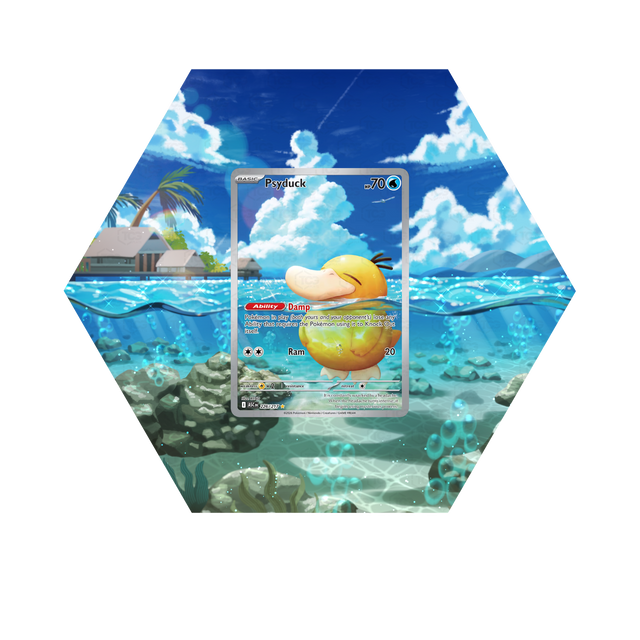
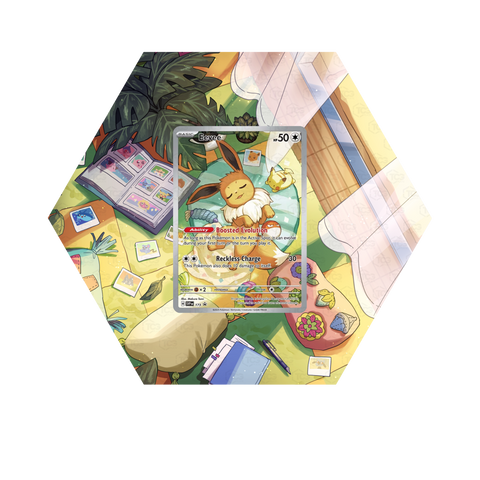
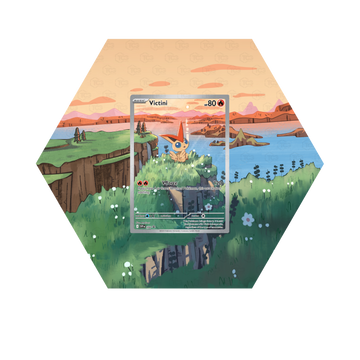
A wall display flips the trade-off around: the card stays protected – in our Hex Shapes® and Frames® inside a UV sleeve – and is still visible on the wall. It stays removable at any time, so you never lose access. And because the display hangs on the wall instead of standing on a shelf, it costs no floor space. If you prefer a clean, frameless look, the acrylic displays are an alternative.
Which card belongs where?
A simple rule of thumb: the broad mass of your collection belongs neatly sorted in storage – compact, protected, and invisible is fine here. Your 5, 10 or 20 favourite cards, on the other hand, deserve the wall: visible, protected, there every day. That way you get both, without having to pick a side.
Not sure which display suits which card? The Display Finder helps, and our post From first display to collector’s wall shows how to plan a whole wall. Answers to detailed questions are in the FAQ.
Frequently asked questions
How do I display Pokémon cards safely?
Three things matter: a protective sleeve (ideally with UV protection), a spot out of direct sun, and protection from dust. Wall displays with a UV sleeve tick those boxes; open stands don’t.
Display or store – which is better?
Both have their place. Bulk and duplicates belong in space-saving storage. Favourite cards win when they’re displayed visibly and still protected.
Does displaying damage cards?
Only if you place them unprotected and in direct sunlight. In a UV sleeve and in a spot out of harsh sun, cards stay well preserved even on permanent display.