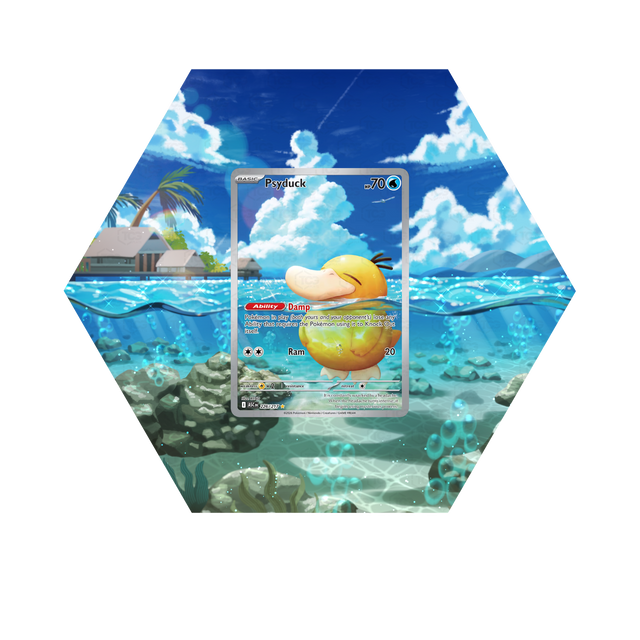
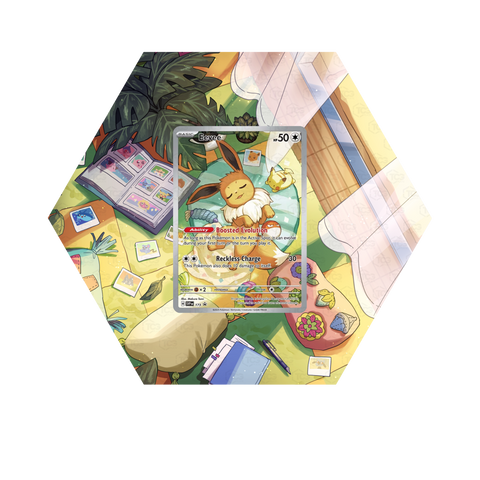
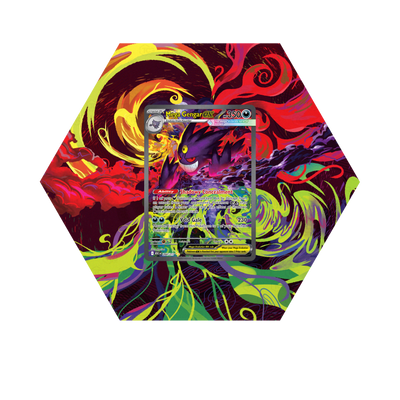
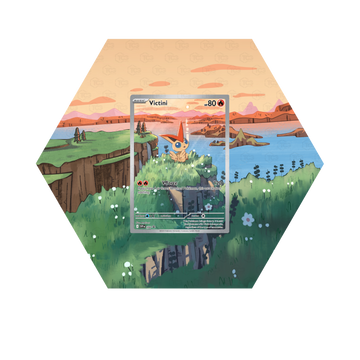
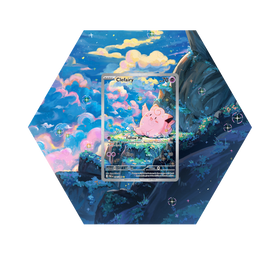
Sooner or later almost every collector reaches the same moment: a card is too beautiful for the binder. A Charizard, a Full Art, that first expensive pull – it belongs on the wall. The obvious idea: pop it into a picture frame. And that’s exactly where the trouble starts.
Pokémon cards simply aren’t a standard size. Buy a frame from the craft store and you’ll notice it fast: the card slips, the mat doesn’t fit, and the card itself sits clamped and unprotected. Let’s look at why that happens – and which routes actually work.
Why a normal picture frame rarely fits
A Pokémon card measures roughly 6.3 × 8.8 cm (about 2.5 × 3.5 in). No common frame size matches that. A 10×15 frame is too big – the card sits loose and shifts with every knock. A frame that’s too tight presses on the card and, over time, damages edges and surface.
Then there’s protection: a picture frame is built for paper photos, not for a trading card whose value depends on flawless edges. Direct contact with glass, trapped moisture behind the pane, no UV protection – all of it works against the card. And visually, the artwork stops abruptly at the card edge, marooned in an empty frame.
What makes a good card frame
Four things decide whether a framed card looks good and stays protected:
- Fit: the card sits exactly, without clamping or slipping.
- Removability: you can reach the card any time, without damaging it.
- Protection: the card sits in a protective sleeve, not bare behind glass.
- Presentation: the frame highlights the card instead of hiding it.
Three ways to frame a card
1. DIY with a picture frame and mat. You buy a frame and cut a mat with a card-sized opening. Cheap, but fiddly – and the card usually sits unprotected. Fine to start with, risky for valuable cards.
2. A toploader or magnetic holder on the wall. The card sits in a sturdy holder mounted to the wall. Good protection, but it looks technical – more storage than décor.
3. A frame that’s made for cards. Displays like our Frames® are built exactly around the card format: the card sits protected in a UV sleeve, stays removable at any time, and is surrounded by a hand-drawn frame. No trade-off between protection and looks.
What Extended Art changes about framing
Here’s the most interesting part: in a classic frame the card is a small rectangle in a large empty field. With the Extended-Art principle, the card’s artwork grows beyond the card edge into the frame – hand-drawn and matched to that exact motif. The frame is no longer just a holder; it becomes part of the picture. A 6×8-centimetre card turns into a wall object.
For more on what Extended Art actually is, see our post Extended Art, Full Art & Illustration Rare.
And graded cards?
Slabs from PSA, BGS or CGC have their own dimensions and won’t squeeze into a normal frame. They need holders built for slab sizes – our post Displaying graded cards on the wall shows how that works in detail.
Which route for whom?
If you just want to hang a single card cheaply and quickly, and you’ll accept a few compromises, the DIY frame is a start. If the card means something – emotionally or financially – and should look good and stay protected for the long run, the way forward is a frame that’s made for cards.
Not sure whether Frames® or a magnetic Hex Shapes® display suits your collection better? The Display Finder helps in two minutes, and all the details are in the FAQ.
Frequently asked questions
Can I frame Pokémon cards in a normal picture frame?
In principle yes, but the card size (about 6.3 × 8.8 cm) matches no standard frame format. Without a fitted mat the card slips, and it usually sits unprotected behind glass. For valuable cards, a frame built for the format is the safer choice.
How do I protect the card inside the frame?
The card should sit in a protective sleeve, ideally with UV protection, and stay removable. Direct contact with glass and trapped moisture are the most common mistakes.
What’s the difference between framing and an Extended-Art display?
With classic framing the card stays a rectangle in the frame. With an Extended-Art display the hand-drawn artwork grows beyond the card edge into the frame – card and frame become one picture.