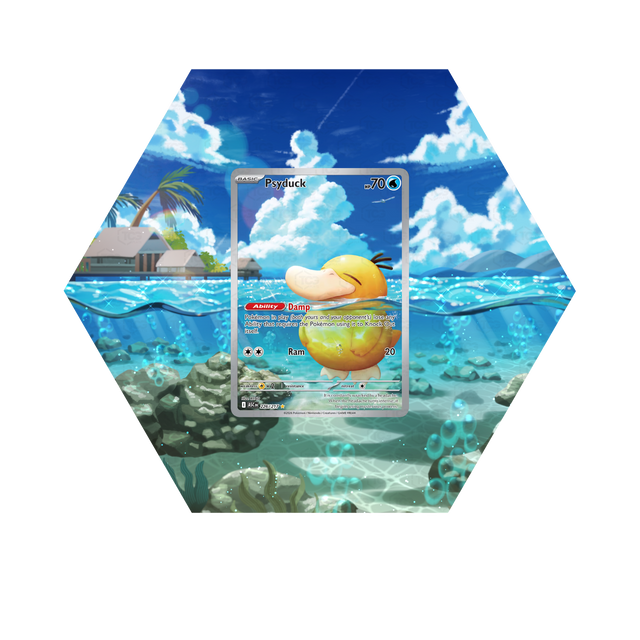
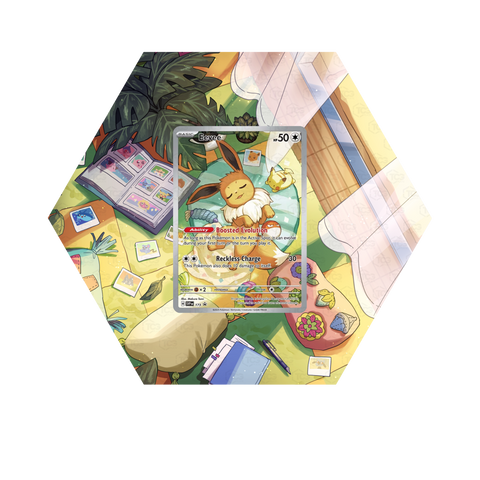
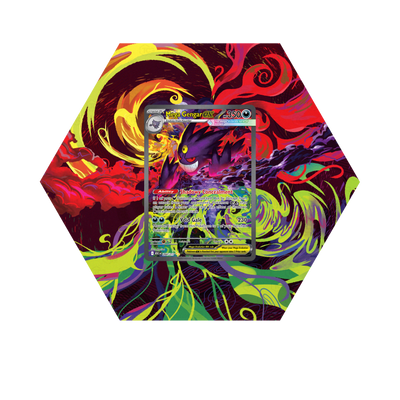
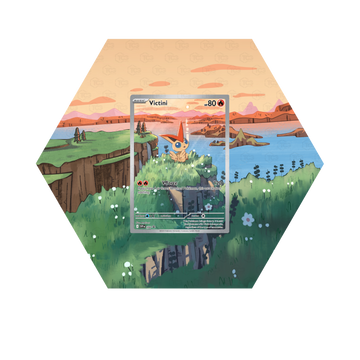
Few topics cause as much lasting confusion among Pokémon collectors as the one around the large-artwork cards. Full Art, Extended Art, Illustration Rare, Alt Art – the terms get thrown around as if they meant the same thing. They don't.
And this is more than nitpicking. Once you understand how these types differ, you simply make better decisions when collecting, buying and displaying. So here's an honest breakdown – no jargon.
Full Art: The illustration takes over the whole card
On a Full Art card, the artwork fills the entire card surface. There's no small image window holding the motif – instead, the name, stats and attacks sit directly on top of the illustration. That makes the Pokémon feel far bigger and more present than on a regular card.
Full Arts have been a fixture of the trading card game for years, and for many people they're the reason to start collecting for the artwork rather than the play value in the first place.
Illustration Rare & Special Illustration Rare: The motif tells a scene
With the Scarlet & Violet era, Pokémon introduced two rarities aimed squarely at artwork fans: Illustration Rare (IR) and Special Illustration Rare (SIR).
On an Illustration Rare, the Pokémon appears in a small scene – in its habitat, in motion, in a moment that tells a story. It's no longer just about the creature, but about a moment. The Special Illustration Rare is the more elaborate, rarer version of this, and is often among the most sought-after cards in a set.
If you know the older term “Alt Art” (Alternate Art): that was the community name from the Sword & Shield years for the same idea – an alternate, usually full-scene artwork. In today's sets it's called Illustration Rare.
So what is “Extended Art”?
This is where it gets interesting – because “Extended Art” isn't an official rarity. You won't find the term printed on the bottom edge of any card.
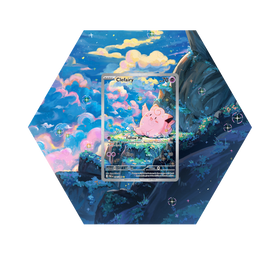
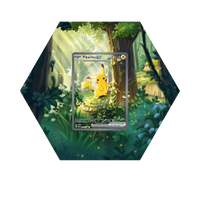
Extended Art describes an idea: continuing the artwork beyond the printed card border. The illustration is drawn outward, turning a credit-card-sized card into a larger, coherent picture. The original card stays completely untouched – it sits protected in the center while the extended artwork frames it.
That's exactly what our displays do. Every motif is drawn by hand – no AI – and continues the artwork of that specific card seamlessly outward. The card itself sits in a precise UV-protection case and can be taken out again at any time.
Why the difference matters for displaying
Full Art, Illustration Rare, Special Illustration Rare – all of these cards live off their large-scale motif. And they're exactly the cards that lose the most when they disappear into a binder page.
Extended Art picks up right there: it turns an already artful card into wall art, without altering or devaluing the card. A Full Art Charizard doesn't just become visible – it finally gets the space its artwork deserved all along.
Not sure which of your cards is a good fit, or which display suits it? Take a look at our Frames® and Hex Shapes® collections, or use our display finder. You'll find many more answers in our FAQ.
Frequently asked questions
Is Extended Art an official Pokémon rarity?
No. Full Art, Illustration Rare and Special Illustration Rare are official card types. “Extended Art,” by contrast, describes continuing the artwork beyond the card border – a way of presenting the card, not a rarity printed on it.
Is my card altered for an Extended Art display?
No. The card stays completely untouched and sits in a removable protective case. The extended artwork only frames it.
Which cards work best?
Any card with a large-scale motif – so Full Arts, Illustration Rares and Special Illustration Rares – looks especially striking as an Extended Art display.